A Guide to Paso Robles Wine Varieties: The Grapes That Define the Region
The diversity of Paso Robles wine varieties is, for many visitors, the most surprising thing about the region. It is not a one-grape appellation — not a place built around a single varietal identity the way Napa is synonymous with Cabernet or Burgundy with Pinot Noir. The Paso Robles AVA grows serious versions of at least a dozen grapes, and the westside sub-appellations in particular have built a compelling case that Rhône varieties — Grenache, Syrah, Mourvèdre, Roussanne, Viognier — can reach their finest expression anywhere in the world right here on these limestone-rich hillsides.
Understanding which varieties thrive in Paso Robles, and why, is the beginning of understanding the region itself. What follows is a guide to the key grapes that define this place: the reds that made the west side famous, the whites that reward attention, and the classic California varieties that have found a serious home alongside them.
Table of Contents
Why Paso Robles Grows Them All So Well
The short answer is climate. The longer answer is that Paso Robles has an unusual combination of factors that benefits multiple grape varieties simultaneously: warm, dry growing seasons with reliable sunshine, followed by dramatically cool nights driven by marine air pushing through the Templeton Gap from the Pacific. That diurnal temperature swing — 40 to 50 degrees between afternoon highs and overnight lows on the west side — preserves the natural acidity and aromatic complexity that make wines interesting, even as the daytime heat builds sugars to high levels.
The soils add the second dimension. The west side, particularly the Willow Creek and Adelaida Districts, sits on calcareousformations, consisting of ancient seabed, fossilized sea creatures, and a limestone-clay mix that drains well, restricts vine vigor, and forces roots deep in search of water. Stressed vines produce smaller berries with higher skin-to-juice ratios — and more concentrated flavor. The soils facilitate high acidity, mineral complexity, and age-worthy tannins in the wine. The east side, by contrast, is flatter and warmer, with alluvial soils better suited to varieties that thrive in the heat, like Zinfandel and Petite Sirah. This geological and climatic range is why the Paso Robles AVA supports such variety — and why the best Paso Robles red wines come from such different parts of the same landscape.
Cabernet Sauvignon
Paso Robles Cabernet Sauvignon is having a serious moment — and not because it resembles Napa. The best examples from the west side are structured, precise, and built to age, showing the influence of calcareous soils and cool nights rather than the plush, full-throttle style that defined California Cab in the 1990s. The combination of concentrated fruit from warm days and firm tannin structure from cool nights produces wines with the kind of balance and freshness that sits well at the table rather than simply impressing out of the bottle.
The Adelaida and Willow Creek Districts produce the most compelling expressions: wines with dark cherry, cassis, and cedar on the palate, graphite on the nose, and a mid-palate weight that carries food well. At their best, they rival the finest estate Cabs produced anywhere in the country — at prices that haven’t yet caught up with that reputation. Our own Cabernet Sauvignon earned 96 pts from Wine Enthusiast and Lisa Perrotti-Brown (Wine Palate)
— scores that position Paso Robles Cab well beyond regional curiosity status.
Grenache
Grenache is where the west side made its name, and it remains the most expressive grape grown in the Willow Creek and Adelaida Districts. The variety’s affinity for well-drained, calcareous soils — the same soils that define southern Rhône’s Châteauneuf-du-Pape — finds a natural match in westside Paso’s limestone-clay terrain. The result is Grenache with genuine weight and structure, not just the high-alcohol, fruit-forward style that lesser terroir tends to produce.
The best Paso Robles Grenache is aromatic, lifted, and layered: Bing cherry and raspberry on the nose, garrigue and dried herb woven through, with a palate that’s full-bodied but never heavy. Fine-grained tannins and natural acidity give it the structure to age, which separates serious westside Grenache from more approachable, fruit-driven versions. It is the grape that, arguably, most clearly articulates what makes this corner of California distinct — and it is on of the foundations of our own red program at Copia, anchored by The Story, our Grenache-led flagship, which earned 93 points from Wine Enthusiast and up to 96 from Jeb Dunnuck.
Syrah
Syrah is Paso Robles’ most versatile red grape and, in the right hands, its most profound. The variety responds dramatically to site and winemaking: cooler, higher-elevation blocks on the west side produce Syrahs with the violets, smoked meat, and black pepper of the Northern Rhône; warmer sites lean toward darker fruit, espresso, and roasted fig. Many producers work both styles simultaneously, and the contrast between them is part of what makes tasting Paso Robles Syrah so interesting.
The best examples are structured to age five to ten years, developing tertiary complexity — leather, dried herbs, iron — that rewards patience. Syrah also works exceptionally well in blends on the west side, providing backbone and spice to Grenache-based GSMs while maintaining its own identity. Our own The Source — a Syrah-dominant blend from our estate vineyards — earned 98 points from Jeb Dunnuck: violets, dark berry, smoked meat, and the structure to develop over the next decade.
Petite Sirah
Despite its name, Petite Sirah (also known as Durif) is not the same grape as Syrah — it is a distinct variety, a crossing of Syrah and the rare Peloursin, that found a home in California long before it gained any traction in France. On the east side of Paso Robles, where warmer temperatures and alluvial soils suit its thick-skinned, slow-ripening character, Petite Sirah produces wines of remarkable density and deep color: blueberry, blackberry, and dark chocolate on the palate, with firm, gripping tannins that soften meaningfully over time in the bottle.
It is a grape that rewards producers willing to be patient in the cellar and drinkers willing to cellar properly — young Petite Sirah can be austere and tannic to the point of imbalance, but with five to ten years of age it becomes something genuinely worth discovering. It is one of the few varieties where Paso Robles’ hotter, flatter east-side terroir gives it a real advantage, producing a style that stands alongside the finest California examples of the grape.
Zinfandel
Zinfandel has been grown in Paso Robles long enough that the region has genuine old-vine plantings — some dating back to the early twentieth century — that produce wines with concentration and character that younger vines simply cannot replicate. The Templeton and Estrella Districts on the warmer east side are the heartland of Paso Zinfandel, where the variety produces its signature combination of jammy red fruit, black pepper, and spice alongside the brambly, earthy complexity that old-vine Zin delivers and nothing else does.
At its best, Paso Robles Zinfandel is not the overblown, high-alcohol style that gave California Zin a mixed reputation in the late 1990s. Producers working with well-managed old-vine blocks produce wines in the 14 to 15 percent alcohol range that carry genuine structure — wines that pair well with food rather than overwhelming it. The grape’s deep California heritage makes it a natural entry point for visitors new to the region and a gateway into understanding how the AVA’s warmer east-side conditions differ from the westside Rhône country that earns most of the critical attention.
Roussanne and Viognier
The white wines of Paso Robles are overlooked by most visitors, which is a mistake. Roussanne and Viognier — the two Rhône white varieties that anchor the west side’s white program — produce wines of real richness and complexity in the Adelaida District, where the combination of cool mornings, warm afternoons, and limestone soils builds the texture and aromatic intensity these varieties need.
Roussanne is the more contemplative of the two: full-bodied, with flavors of melon, cashew, and stone fruit layered under a slightly saline minerality. It ages beautifully and gains complexity with a few years in the bottle — an unusual quality for a white wine. Viognier is more immediately expressive: peach, apricot, and orange blossom on the nose, with a lush, slightly weighty texture on the palate that carries the variety’s signature perfume. Both grapes are often blended together on the west side, with Roussanne providing structure and length while Viognier contributes aromatics and richness. At their best, these blends are among the most compelling whites produced anywhere in California — our own White, a Roussanne-dominant blend from the Adelaida Estate, is one of the most frequently overlooked wines in our portfolio — and one of the most rewarding.
Paso Robles Wine Varieties at a Glance
| Variety | Style | Flavor Profile | Best District | Aging Potential |
|---|---|---|---|---|
| Cabernet Sauvignon | Full-bodied, structured | Dark cherry, cassis, cedar, graphite | Adelaida, Willow Creek | 8–15+ years |
| Grenache | Medium-full, aromatic | Cherry, garrigue, dried herb, violets | Willow Creek, Adelaida | 5–10 years |
| Syrah | Full-bodied, complex | Dark berry, black pepper, smoked meat, violets | Willow Creek, Adelaida | 5–10+ years |
| Petite Sirah | Full-bodied, dense | Blueberry, dark chocolate, firm tannins | Templeton, Estrella | 8–12+ years |
| Zinfandel | Medium-full, spicy | Jammy red fruit, black pepper, bramble | Templeton, Estrella | 3–7 years |
| Roussanne | Full-bodied, rich | Melon, cashew, stone fruit, mineral | Adelaida | 3–6 years |
| Viognier | Medium-full, aromatic | Peach, apricot, orange blossom, lush texture | Adelaida, Willow Creek | 1–3 years |
Finding These Varieties at Copia Vineyards
Our portfolio is built around the westside varieties we grow on the Willow Creek and Adelaida Estates: Grenache, Syrah, Mourvèdre, Cabernet Sauvignon, and the Rhône whites — Roussanne, Viognier, and Picpoul Blanc — that go into our White blend. They are the grapes that this landscape is best suited for, and the wines we’ve spent the past decade learning to grow well.
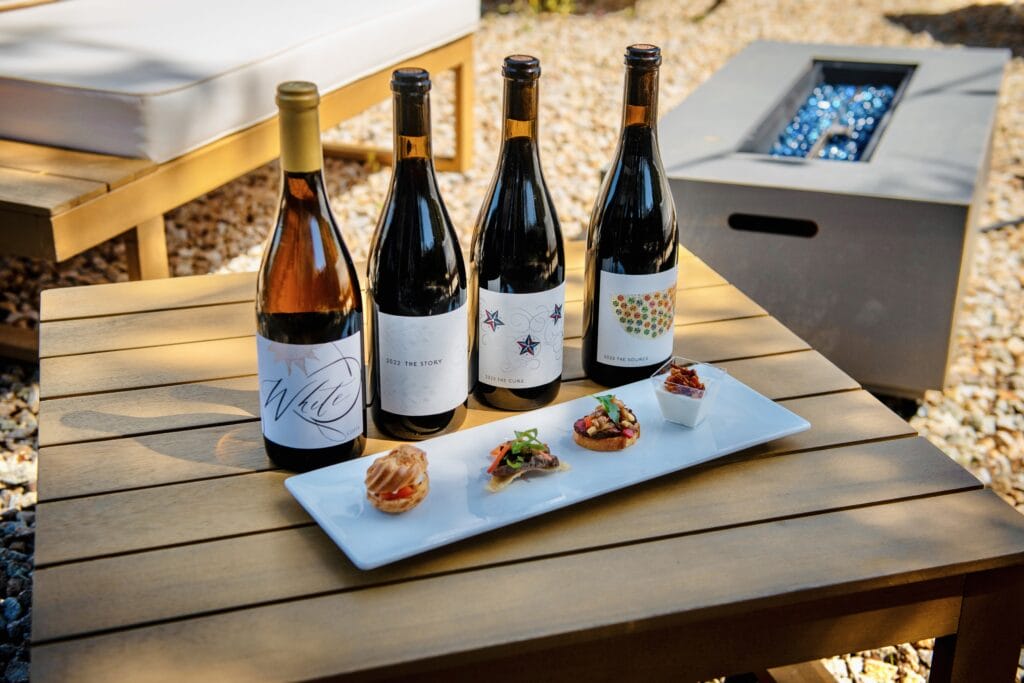
The Story (Grenache) and The Cure (GSM blend) sit at the heart of our Rhône red program. The Source is our estate Syrah — structured, age-worthy, and built for a decade in the cellar. Our Cabernet Sauvignon represents the Adelaida District’s capacity for the variety, earning some of the highest scores we’ve received. And our White captures the particular quality of Adelaida Roussanne and Viognier: textured, aromatic, and genuinely complex for a California white. All current releases are available through our online wine shop. If you’d like to explore these varieties across multiple vintages with dedicated tasting notes and food pairings, our wine club membership provides access to every new release alongside complimentary tastings at our Adelaida Estate Tasting Room.
Paso Robles rewards the curious drinker — the one willing to move beyond the familiar and discover why a region this diverse is producing wines that belong in any serious conversation about American wine. Explore Copia’s current releases and see what the west side’s best varieties look like in the bottle.
Frequently Asked Questions
What wines is Paso Robles known for?
Paso Robles is best known for its Rhône varieties — particularly Grenache, Syrah, and Mourvèdre from the westside Willow Creek and Adelaida Districts — as well as Cabernet Sauvignon, Zinfandel, and Petite Sirah. The region produces serious examples of all these grapes, with the west side especially recognized for world-class Rhône-style reds.
What are the best Paso Robles red wines?
The best Paso Robles red wines come from the westside appellations — Willow Creek and Adelaida Districts — where limestone soils and significant diurnal temperature swings produce reds with structure and aging potential. Grenache, Syrah, GSM blends, and Cabernet Sauvignon from these districts have earned top scores from major critics and are among the most compelling reds produced in California.
Is Paso Robles Cabernet Sauvignon worth seeking out?
Yes. Paso Robles Cabernet Sauvignon from the west side has emerged as one of California’s most exciting expressions of the variety — structured, balanced, and built for the cellar, with a flavor profile that differs meaningfully from Napa Valley. Several Paso Cabs have earned scores in the mid-to-high 90s from major critics, often at prices well below equivalent Napa bottles.
What is the difference between Paso Robles Grenache and Syrah?
Paso Robles Grenache tends to be aromatic, lifted, and cherry-forward with garrigue and dried herb character — medium-full in body with fine tannins. Syrah from the same region is darker and more structured: black pepper, smoked meat, and dark berry, with the capacity to age longer and develop more complex tertiary character over time.
Do Paso Robles wineries make good white wine?
Yes. The Rhône white varieties — Roussanne, Viognier, and Picpoul Blanc — produce compelling whites in the Adelaida District, where cool mornings and limestone soils build the texture and aromatics these grapes need. These are among the most underrated white wines produced anywhere in California.