Things to Do in Paso Robles Wine Country
Paso Robles is a wine region, yes — one of the most exciting in the country — but it’s also a place that rewards you for staying longer than a single tasting appointment. The town has real restaurants, not just tasting-room afterthoughts. The landscape invites you to hike, soak, and drive with the windows down. And the best things to do in Paso Robles tend to happen in the spaces between wineries: a long lunch under the oaks, a soak in natural hot springs, a sunset walk through the downtown square with a glass of something local in hand.
Table of Contents
Wine Tasting — From Boutique Cellars to Estate Vineyards
Wine tasting is the obvious starting point — and in Paso Robles, the experience is categorically different from what most people have encountered in Napa or Sonoma. The region is home to more than 250 wineries, but the vast majority are small-production estates where the person pouring your wine might also be the person who pruned the vines that morning. Tasting rooms are appointment-only more often than not, which sounds exclusive but actually means the opposite: you’re getting a dedicated host, a curated flight, and time to ask the questions you’d never get to at a crowded bar.
The character of the wine shifts meaningfully depending on which side of town you’re on. The westside — the Adelaida, Willow Creek, and Templeton Gap districts — sits at higher elevation, cooled by the Templeton Gap wind corridor that pulls marine air inland from Morro Bay. This is where the region’s most serious Rhône and Bordeaux producers have staked their ground: Tablas Creek, with its direct lineage to Château de Beaucastel; Booker Vineyards, which makes some of the most concentrated Syrah in California; L’Aventure, whose Bordeaux-Rhône blends helped put Paso on the international map. The eastside, along Highway 46 East and toward San Miguel, tends warmer and more approachable — Zinfandel country, with a more casual tasting room vibe and some genuinely charming smaller producers worth seeking out.
At our tasting room, we pour estate Rhône and Bordeaux varietals Thursday through Monday. The Estate Wine Tasting — $30 per guest — is a sixty-minute seated flight of our premium wines, indoors or on the shaded patio.
For those wanting to go deeper, the Walking Tour with Culinary Provisions moves through our production areas and cellar, includes a barrel taste, and culminates in a seated pairing of wines and seasonal provisions. The experience reflects the way we love to host: generous, personal, and rooted in our Indian heritage, with food shaped by our culinary backgrounds, the rhythms of the estate garden, and what pairs beautifully with the wines. You can explore all tasting options on our experiences page.
Where to Eat — Restaurants Worth the Drive
Paso Robles has become one of the best food towns on the Central Coast, and the dining scene here doesn’t exist in isolation from the wine — it’s built around it. The restaurants that have taken root in the last decade are run by chefs who came specifically because of the proximity to vineyards, farms, and ranches, and the menus reflect that closeness to source in ways that feel earned rather than performative.
Six Test Kitchen, tucked into a converted space in Tin City, offers an intimate multi-course tasting menu that often pairs each dish with a local wine. The restaurant holds one Michelin star, and it feels every bit like the kind of dinner you plan the evening around: polished, immersive, and absolutely worth the splurge.
Les Petites Canailles brings French bistro technique to California produce and does it with the confidence of a much older restaurant. The Hatch Rotisserie and Bar, on the downtown square, is the reliable local favorite: wood-fired rotisserie, seasonal sides, and a wine list that reads like a love letter to the region.
For something more casual, Fish Gaucho pairs Central Coast seafood with creative cocktails in a space that’s lively without being loud.
Outdoor Adventures Beyond the Vineyard
Paso Robles wine country stretches across a landscape that’s worth exploring on foot, on two wheels, and — at least once — from a natural hot spring. The outdoor activities here are what separate Paso from more manicured wine destinations, where the experience begins and ends at a tasting room door.
The hot springs are the headliner for many visitors. River Oaks Hot Springs Spa, just south of town, offers private mineral spring tubs overlooking the oak-covered hills — a welcome reset between tasting appointments or at the end of a long day. Franklin Hot Springs, east of town, is more rustic and less developed, which is part of the appeal: a natural thermal pool on the edge of an open field, with nothing around you but sky and grass.
For hiking, the Fiscalini Ranch Preserve in Cambria is a forty-minute drive and worth every mile — blufftop trails above the Pacific, Monterey pines, and coastal air that clears the palate in every sense.
If you’re willing to wander a little farther, Montaña de Oro State Park in Los Osos rewards the detour with rugged cliffs, secluded beaches, tide pools, and some of the most dramatic coastal scenery in San Luis Obispo County.
Closer to town, the Salinas Riverwalk and Larry Moore Park offer easier terrain for morning walks before the day’s first tasting. In spring, the wildflower drives along Vineyard Drive and the Adelaida corridor are extraordinary — California poppies and lupine against limestone hills that look more like Provence than the Central Valley.
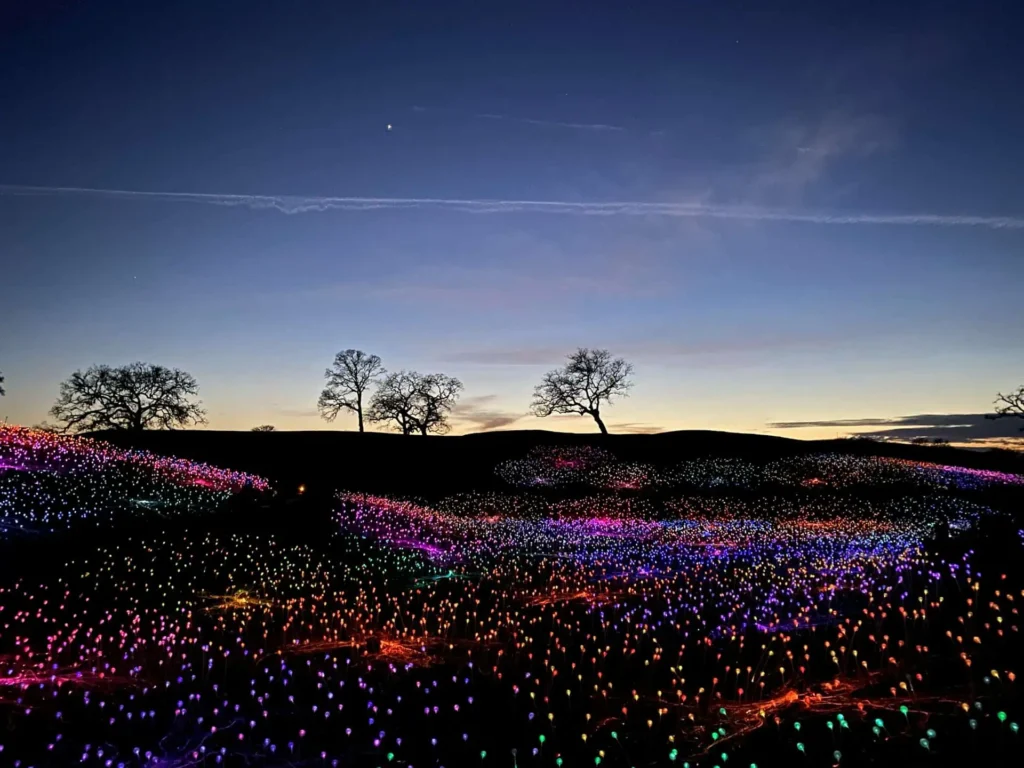
Lastly, Bruce Munro’s Sensorio — more than 100,000 fiber-optic spheres illuminating the rolling hills after dark, shifting through slow blooms of color. It’s now a permanent installation, and it still takes our breath away every time. Come at sunset, bring a layer, and give yourself time to wander. Nothing else like it anywhere.
Downtown Paso — Shopping, Art and Evening Life
The park at the center of downtown Paso Robles is shaded by heritage oaks, and surrounded on all sides by tasting rooms, restaurants, and local shops. It functions as the town’s living room — the place where visitors and locals converge without anyone needing to organize it. The weekly farmers’ market takes over the park on Saturdays, with local produce, cheese, olive oil, and enough free samples to constitute a second breakfast.
Tin City, a few minutes south of downtown, is the district that catches most first-time visitors by surprise. It’s a cluster of industrial-chic spaces housing small-lot wineries, a cidery, craft distilleries, a brewery, and some of the best casual food in the region — all walkable within a single block. It’s the kind of place where you can taste a natural Grenache, pivot to a barrel-aged cider, eat wood-fired pizza standing up, and finish with an amaro tasting before deciding what to do for dinner.
For art, the Studios on the Park co-op on the downtown square houses working artists with open studios — you can watch painters and printmakers at work and buy directly. Several galleries on and around Park Street rotate exhibitions of Central Coast and California artists, and the first Saturday of each month brings an extended gallery walk with openings and receptions.
Staying in Wine Country — Where to Sleep
A downtown hotel puts you within walking distance of restaurants and the square — useful if your evenings tend to extend past dinner. A vineyard property puts you closer to the morning light, the quiet, and the west-side tasting rooms that are worth the extra ten minutes of driving.
The boutique hotel options downtown have matured in the last few years. The Piccolo, The Ava Hotel, and Paso Robles Inn each offer a different register of comfort, and all of them are steps from the square. Vacation rentals along the westside corridors — Vineyard Drive, Adelaida Road, Peachy Canyon — put you in the middle of the vineyards themselves, which changes the texture of the trip considerably: you wake to oak-covered hills instead of downtown sidewalks, and your first tasting of the day might be five minutes away rather than twenty. Read about more options in our guide to the best hotels in Paso.
We built The Source Home and The Story Home on our Willow Creek Estate so that guests could wake up inside the vineyard — surrounded by forty thousand vines, with nothing visible beyond the estate and the hills of the Willow Creek District. Both are fully equipped private homes, minutes from downtown and the best westside wineries, and available at a members-only rate for wine club members. They’re bookable through our guest homes page.
Planning Tips — When to Go and How Long to Stay
The best time to visit depends on what you’re after. Spring — March through May — brings wildflowers, mild temperatures, and quieter tasting rooms with an unrushed rhythm. Fall — September through November — is harvest season, when the vineyards are at their most alive and the town carries an infectious, end-of-the-year energy. Summer is peak season: hot days, full calendars, and long golden evenings. Winter is the quiet season — cool, sometimes rainy, and ideal for anyone who wants the region mostly to themselves.
Two to three nights is the sweet spot. A single day is possible but quite rushed — you’ll fit in two or three tasting appointments and a dinner, and you’ll leave feeling like you barely started. Two nights let you taste on the westside one day, explore downtown or the eastside the next, with time for a hike or a soak in between. Three nights is the pace the region was built for: unhurried, with room for a long lunch and the kind of return visit to a favorite winery that turns a trip into a relationship.
Paso Robles is roughly four hours from Los Angeles via Highway 101, three and a half from San Francisco, and thirty minutes from San Luis Obispo. A car is essential — the wineries are spread across a wide area, and the westside estates are a fifteen-to-twenty-minute drive from downtown.
Book tasting appointments in advance, especially for weekends and especially on the westside, where most estates are appointment-only year-round. You may also leave moments for spontaneity: walk-ins are sometimes possible, and some of the region’s best discoveries happen when you leave a bit of room in the day to follow a backroad, a recommendation, or a tasting room sign that catches your eye.
For a two-day wine tasting itinerary — including where to start and how to pace a tasting day — the Paso Robles wine weekend itinerary lays it out step by step. And for first-time visitors building a trip from scratch, the comprehensive guide to visiting Paso Robles wine country covers everything from budgeting to booking.
Frequently Asked Questions
What is Paso Robles known for? Paso Robles is known for its world-class wine production — particularly Rhône varieties like Grenache and Syrah, and Bordeaux varieties like Cabernet Sauvignon. The region is also recognized for its dramatic landscape, farm-to-table dining, natural hot springs, and the small-town character of its downtown square.
How many days do you need in Paso Robles? Two to three days is ideal. A two-night stay gives you time for wine tasting on both the westside and eastside, a great dinner, and at least one non-wine activity like hiking or soaking in the hot springs. Three nights allows for a more relaxed pace and deeper exploration.
Is Paso Robles worth visiting? Absolutely. Between the wine, the food, the landscape, and the access to winemakers, the things to do in Paso Robles rival any wine region in California — with smaller crowds, lower prices, and a far more personal tasting experience than Napa or Sonoma.
The best way to begin is with a glass of something grown here — poured slowly, in a room where the only agenda is the wine itself. We’d love to have you at our table. Plan your tasting at Copia.
Photo by Kevin Lanceplaine on Unsplash