Best Boutique Wineries in Paso Robles: Hidden Gems Beyond the Big Names
Boutique wineries in Paso Robles are where the region’s real character lives: gravel lots, appointment-only hours, a winemaker who still hand-labels cases in certain vintages. We’ve spent years finding these places, and a few of them we now consider friends.
This is a list of the ones too small to advertise their way onto anyone’s radar — the kind you find by asking a local, or by us telling you now. Book ahead for every one of them; most don’t offer a walk-in option, and that’s exactly the point.
Most of what follows sits on the west side, scattered along the same ridgelines and canyon roads as the wineries everyone’s already heard of — Adelaida Road, Vineyard Drive, the Tin City industrial park just south of downtown. A few require a phone call rather than an online booking form. None of them will show up first in a search for “top wineries in Paso Robles,” and that’s precisely the value of a list like this one.
Table of Contents
What Makes a Winery Genuinely Boutique
“Boutique” gets used loosely in wine country marketing, so it’s worth being specific about what actually earns a spot on this list. Every winery here produces a small enough volume that the person who founded it is still the one running it — which usually means the winemaker, not a hired tasting room manager, is the one pouring your flight. Most are appointment-only, a few literally reachable only by a footbridge or a call ahead. None of them have a marketing department putting “boutique” in a press release; they’re boutique because of how the operation is built, not how it’s described. That distinction matters more than square footage or case count alone.
It’s also worth saying plainly: small doesn’t mean lesser. Several of the wineries below are putting up scores from major critics that rival anything from the region’s bigger names, precisely because a founder-winemaker farming a few acres by hand can afford an attention to detail that doesn’t scale. That’s the real argument for seeking these places out.
Sixmilebridge
Jim and Barbara Moroney planted Sixmilebridge with Bordeaux varieties in mind, and the winery has stayed close to that original, uncomplicated ambition — estate-grown, organically farmed, made without excess. The tasting room looks out over the vines themselves, and the pace is unhurried and conversational rather than scripted. It’s the kind of place where a fifteen-minute tasting turns into an hour because nobody’s rushing you toward the door, and where the wines being poured were likely bottled within sight of where you’re sitting.
Brecon
Brecon sits under a canopy of old oaks on Vineyard Drive, and getting there means crossing a footbridge — there’s no drive-up entrance, which keeps it from ever feeling like a stop on a bus tour. The Welsh-founded winery built its name on Cabernet Franc and Albariño, sold exclusively through the tasting room and nowhere else. Bring a picnic if you’d like; Brecon welcomes them, and the come-as-you-are atmosphere is part of what makes the walk worth it. There’s no rush here either — pours tend to run long, and conversation with whoever’s behind the bar is half the reason to come.
Torrin Wines
Scott and Viquel Hawley spent two decades making small-batch wine before they ever opened a tasting room, and Torrin still carries that patience in its focus on Rhône-style blends. The tasting room didn’t open until late 2018, appointment-only from day one, which keeps every visit intimate by design rather than by accident. If Grenache and Syrah are why you’re in Paso Robles wine country, Torrin belongs on your list — it’s a smaller, quieter counterpoint to the region’s bigger Rhône names, run by two people who’ve been doing this since long before it was fashionable.
Paix Sur Terre
The name means “Peace on Earth,” and the winery’s abstract, hand-illustrated labels — created by an Oakland-based artist — signal early that this isn’t a conventional tasting room. Paix Sur Terre leans into creative, sustainably farmed blends that don’t always follow the expected Paso script, and it’s common to find the owners themselves behind the tasting bar, talking through what’s in your glass. Appointments are required, and worth booking a few days out — this is a winery built for people who want to talk about wine, not just drink it.
Clos Solène
Guillaume Fabre left Bordeaux for Paso Robles about a decade ago and spent his early years here interning under Stephan Asseo at L’Aventure before striking out with his own label. Clos Solène‘s wines are limited-production and unmistakably elegant — more restrained than many of the bigger westside reds, with a European sensibility that shows in every glass. He later co-founded Benom with his brother Arnaud, but Clos Solène remains his own quieter project, and it’s worth seeking out specifically for that reason — it’s the clearest expression of where his own palate lands when nobody else’s name is on the label.
Kiler Canyon Vineyard
Kiler Canyon is the newest name on this list, a micro-production label devoted entirely to estate-grown Rhône wines that only launched in 2025. It’s already earning attention it shouldn’t have this early — the 2021 Reserve Syrah and 2020 Estate Cuvée each scored 95 points from Wine Enthusiast, and the 2023 Roussanne picked up 94 points from James Suckling. Find it now, before the allocation list gets long — this is as close as you’ll get to discovering a Paso Robles Rhône producer on the ground floor.
Copia Vineyards — Boutique by Design
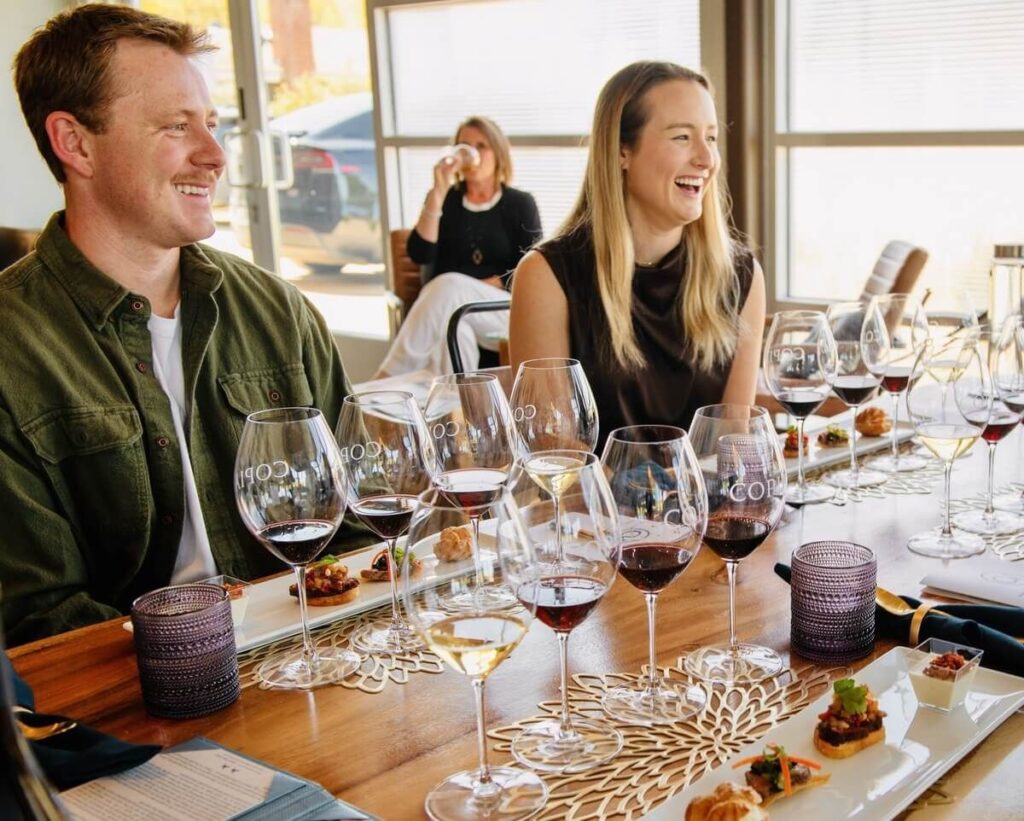
We’d put ourselves on this list too, though we’re boutique in a slightly different way than most of the names above. Anita and Varinder still oversee the farming, the winemaking, and the hospitality ourselves — there’s no layer of management standing between us and the wine in your glass — but we built Copia with enough room to host a proper seated flight and tell the full story behind it, not just pour and send you on your way. Our estate fruit comes from the Adelaida District, and our seasonal pairing flights carry the Indian heritage that shapes our own table at home. It’s the same intimacy as the wineries above, just with a little more room to sit down.
If you want to feel the difference between a boutique winery built small on purpose and one that simply started that way, come taste both in the same week. Our tasting experience runs Thursday through Monday on Mustard Creek Road, with an Estate Wine Tasting for guests who want a focused hour and a Walking Tour with Culinary Provisions for anyone who wants the fuller story behind the wine.
Planning a Day Around Paso’s Smallest Wineries
Book ahead — most of the wineries on this list don’t take walk-ins, and several cap their group sizes at six to eight guests. Two to three of these tastings is a realistic day; the pours are unhurried, the conversations run long, and the drive times between appointment-only estates add up faster than they look on a map. It’s worth pairing one or two of these hidden names with an estate you already know, ours included, so the day has both discovery and a guaranteed great pour. Several of these wineries — Torrin, LXV, Kiler Canyon, Terranean — sit close enough to each other on the west side and around Tin City that a loosely planned day can string three of them together without much backtracking. Call ahead the same week if you can; small teams mean tasting slots fill differently than at a large estate, and a friendly phone call often finds room that an online calendar shows as full. For the region’s more established names alongside these smaller ones, our guide to the best Paso Robles wineries is worth keeping open in another tab while you plan.
If you’re chasing down the wineries too small to advertise, come find us on Mustard Creek Road too — we’ve been getting found by word of mouth since 2017, one pour at a time. Book a tasting at Copia and see where the list takes you next.