Rhône Varieties in Paso Robles: The Best Wineries to Visit
Grenache shows you where it grew. Plant it somewhere too warm and it goes jammy and loose; plant it somewhere too cool and it never quite opens. On the limestone hills west of Highway 101, where afternoons run hot and nights drop forty degrees or more, it does something else. It keeps its perfume and its spine together, and the wine comes out tasting of red fruit, dried herbs and crushed rock.
That’s why Rhône varieties in Paso Robles have gone from a curiosity to the region’s signature in about thirty years. Outside the Rhône Valley itself, very few places grow Grenache, Syrah, Mourvèdre, Viognier and Roussanne this naturally. These grapes are at the heart of what we grow, and we still think the best way to understand them is to taste them where they grow: one producer at a time, side by side, with the soil a few feet away. These are the wineries we’d send you to first.
Table of Contents
What Earns a Place on This List
Plenty of Paso Robles wineries pour a Syrah. These picks are the ones where Rhône varieties are central to who they are. Each grows or sources its fruit on the westside, where calcareous soils and the Templeton Gap’s marine air give Rhône grapes the structure to age. Each also has a clear point of view in the glass, so you’ll know whose wine you’re drinking. We’ve left the big multi-varietal estates to our broader guide to the best Paso Robles wineries. If you want to sharpen your palate before you go, our guide on how to taste Rhône wines in Paso Robles covers what to look for in each grape.
Tablas Creek Vineyard
You can’t talk about Rhône varieties in Paso Robles without starting on Adelaida Road. Tablas Creek was founded by the Perrin family of Château de Beaucastel, one of Châteauneuf-du-Pape’s great estates, together with their longtime American importer Robert Haas. They picked this part of the westside because its limestone soils and climate reminded them of home. Then they imported vine cuttings from France, propagated them in their own nursery and sold that plant material to other growers. A remarkable share of the Rhône vines now planted across California can trace their lineage back to this property.
The tasting room is the most educational stop on the westside. The flights often include varieties most visitors have never tasted on their own, like Counoise and Picpoul Blanc, alongside the blends. Esprit de Tablas, the estate’s Mourvèdre-led red, is the benchmark Paso Rhône blend. Their white version, built around Roussanne, is one of the best arguments for Roussanne in Paso Robles. Go early in your trip. Everything you taste afterward will make more sense.
Saxum Vineyards
Saxum is the producer that changed how the wine world saw Paso Robles. Justin Smith farms the James Berry Vineyard in the Willow Creek District, a steep site of calcareous shale. When his 2007 James Berry Vineyard blend was named Wine Spectator‘s Wine of the Year, the region’s Rhône story suddenly had a national audience.
The wines are big, dense, Grenache- and Mourvèdre-driven blends with real tension underneath the ripeness. They’re also among the hardest wines in California to get. Tastings are by appointment and very limited, and most bottles go to a long-standing mailing list. If you can secure a visit, take it. If you can’t, look for the wines on restaurant lists downtown. Either way, they set the high-water mark for what Willow Creek Grenache can be. Taste one and the rest of this list comes into focus.
L’Aventure Winery
Stephan Asseo left a successful winemaking career in Bordeaux for Paso Robles in the late 1990s. A big part of what drew him was freedom. French appellation law wouldn’t let him blend Syrah with Cabernet Sauvignon. Here, nothing stopped him. L’Aventure, on Live Oak Road in the Willow Creek District, built its reputation on exactly that blend. The flagship Optimus and the Estate Cuvée both pair the savory, peppery depth of Syrah with Cabernet’s structure.
For Rhône lovers, L’Aventure is worth a visit because it shows what Paso does differently from the Northern Rhône. The Syrah here is riper, darker and more generous. The winemaking is still precise enough that the wines stay fresh. It’s a useful counterpoint to Tablas Creek’s more traditional approach, and the tasting room is one of the prettiest settings on the westside.
Halter Ranch
Halter Ranch covers a big piece of the Adelaida District: a historic Victorian farmhouse, a covered bridge you drive through on the way in, and vineyard blocks climbing the hillsides. It grows both Bordeaux and Rhône varieties. The Rhône side is the reason to come. Côtes de Paso, the Grenache-Syrah-Mourvèdre blend, is one of the most reliable entry points to Paso Rhône blends anywhere, and the white Côtes de Paso offers an easy introduction to Roussanne, Grenache Blanc and Picpoul Blanc.
It’s also one of the best stops for a group with mixed tastes. One person can work through Syrah while another tastes Cabernet, and nobody feels shortchanged. The grounds invite you to linger, and you’ll still be close to the rest of the Adelaida District wineries.
Booker Vineyard
Eric Jensen came to winemaking as a grape grower, and Booker shows it. His westside estate is farmed for intensity. The resulting wines include the Syrah-led Fracture and Grenache-driven blends that are bold without being shapeless. The quality has a lot to do with how the vines are grown. For readers searching for the best Grenache in Paso Robles, Booker belongs on any shortlist.
The tasting room is modern and calm, and the view runs straight down the vineyard rows. If you want to see how far Paso Rhône winemaking has come in a single generation, put Booker and Tablas Creek on the same day. They show two very different paths to world-class Grenache.
Copia Vineyards
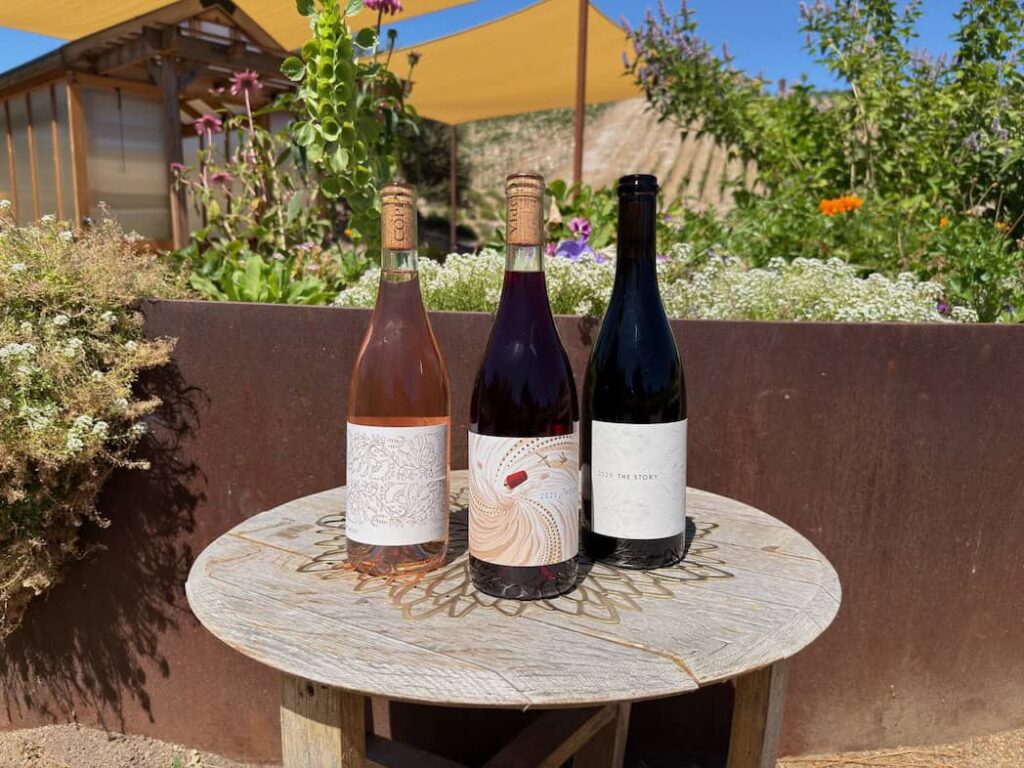
We’ll admit our bias up front: Rhône varieties are much of the reason we’re here. We farm two estate sites: fifty acres in the Willow Creek District and twenty-six in the Adelaida District, which we added in 2022. Our red wines are named rather than labeled by grape. The Story is Grenache-led. The Source is Syrah with a little Grenache and a touch of Viognier. The Cure is our GSM blend, and The Anchor is built on Mourvèdre. Our White blends Roussanne and Viognier from the Adelaida estate. It’s a waxy, textured wine with Meyer lemon, toasted nuts and crushed-stone minerality.
The best way to explain what we’re after is to share what someone else heard in the glass. Jeb Dunnuck recently reported on the 2024 Paso Robles vintage. Tasting our 2024 reds from barrel, he scored The Source at 96–98 points, The Cure at 95–97, and both The Story and The Anchor at 93–95. He gave our 2025 White 92 points. He also wrote that our quality “took a real jump with the 2019 vintage” and has been “consistently high year in and year out.” Consistency is what we’re proudest of. Small lots from estate fruit, picked block by block, aren’t the fastest way to make wine. In a warm, generous vintage like 2024, though, that patience is what keeps Grenache from going soft and Syrah from going heavy.
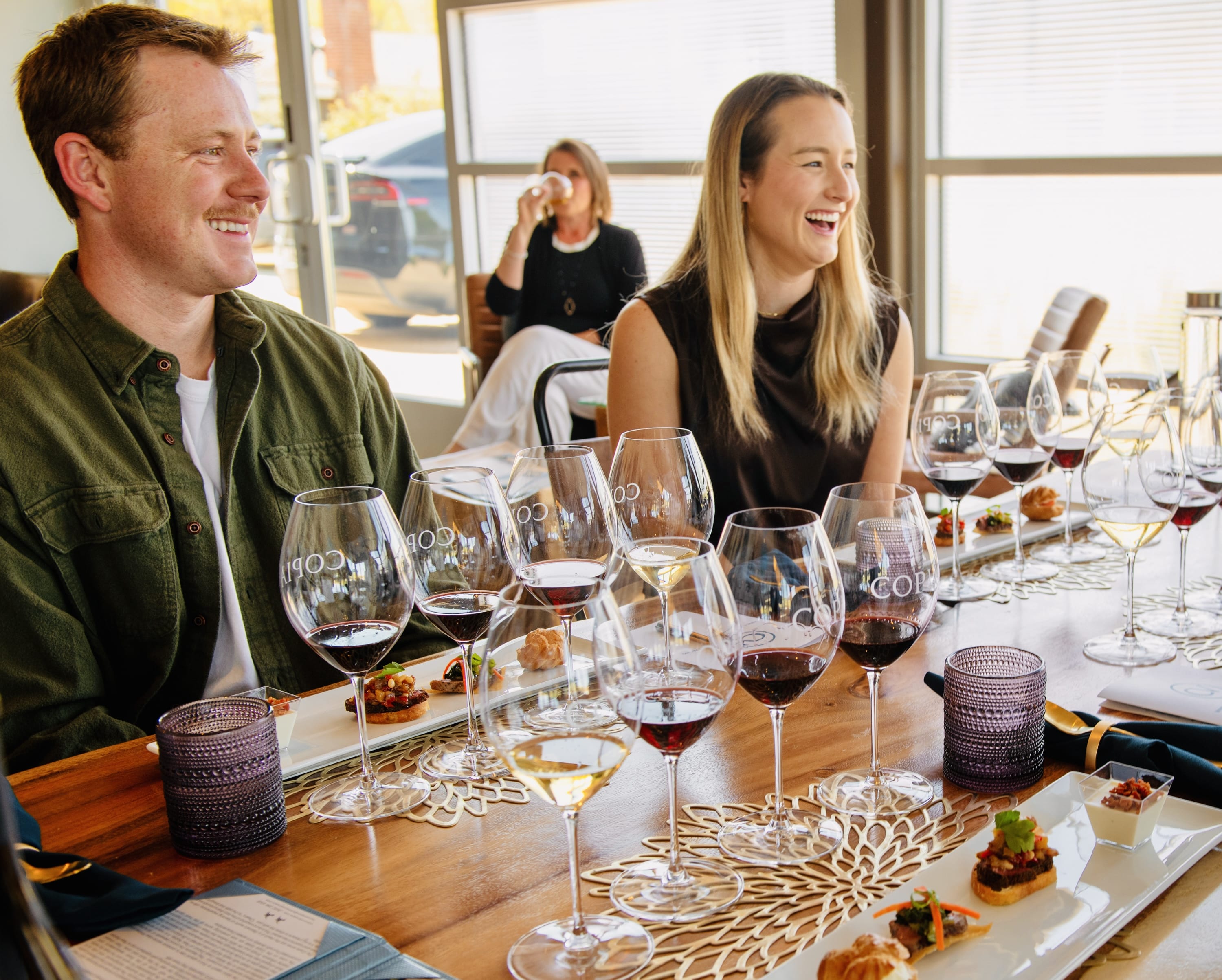
What makes a visit different is the table. Our tasting room on Mustard Creek Road pours these wines. The simplest route is to come taste with us. You can book an estate tasting at Copia Thursday through Monday.
Planning a Rhône-Focused Tasting Day
Three wineries is the right number for a day of tasting Paso Robles Rhône wine. Four is pushing it. Rhône reds are generous, and your palate will thank you for spacing them out. Most of the producers above sit within a twenty-minute drive of each other along Adelaida Road, Vineyard Drive and Peachy Canyon Road, so it’s easy to build a loop. Start with a teaching-focused stop like Tablas Creek in the morning, have lunch in the middle, and save a seated, unhurried tasting for the afternoon.
Reservations are required almost everywhere on the westside now, and fall weekends book out early. October is Harvest Wine Month in Paso Robles, so you may see crush in progress at many of these wineries and taste wines straight from tank or barrel. To get the full range of the Rhône family, ask for Mourvèdre and the white Rhône varieties as well as the Grenache and Syrah everyone knows. Viognier and Roussanne from Paso Robles are some of the most underrated wines in California, and they rarely leave the region. If this is your first trip, our first-time visitor’s guide to Paso Robles wine country covers getting around, where to stay and when to go.
Rhône grapes are made for sharing: a pot on the stove, a long table, glasses refilled without anyone keeping track. That’s how we drink them at home, and it’s how we hope you’ll taste them with us. Come spend an afternoon at our tasting room. Taste the vintage the critics are talking about, and see why these grapes feel so at home here. Reserve your Copia tasting →